
Mobile App Development Cost in India (2026 Guide) | Pricing & Breakdown
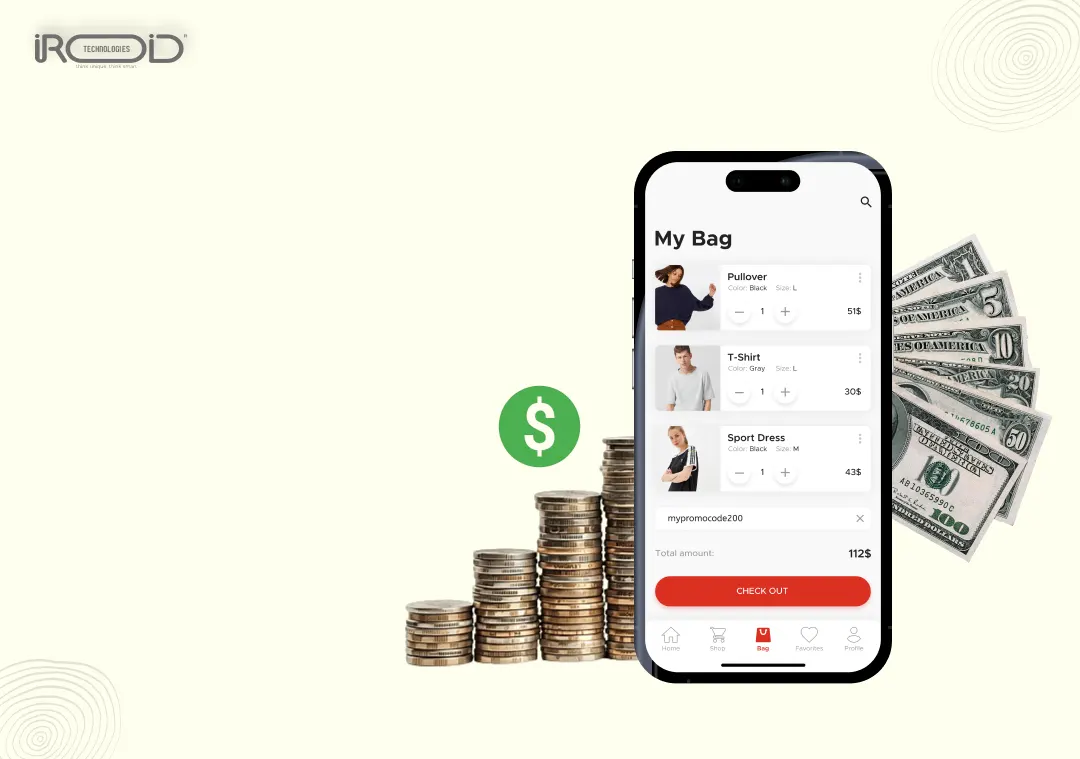
The usage of smartphones has made mobile apps a necessity in our daily lives. From the quick doorstep delivery on a hazy Sunday morning to the late-night dinner delivery during exciting cricket matches, mobile apps are the go-to solution for any requirement that we can think of. Not just our basic needs, mobile apps also play a significant role in understanding, building, and boosting businesses and sales.
So the question is: How much does mobile app development cost in India? The recent demand and supply trends show us a clear picture of mobile app development pricing in India, which ranges between Rs. 1,50,000 to Rs.10,00,000.As a connecting point between users and their daily lives, a mobile app has definitely become the face of an organisation and a faster way to reach its customers. No matter how petite it may look, an app is a portable, approachable, and timeless form of communication for both business owners and customers. This blog explains the average mobile app development cost, the need to approach a mobile app development company in India and everything you need to know about the development process.
Cost complexity image
The cost complexity of a mobile app depends on the amount of technical requirements that the app needs to meet, which is carried out by the exclusive features:

Here are some of the major factors that affect the mobile app development costs are:
Security and compliance:
This involves the level of security and privacy that the app can provide. This is done through ways such as ‘multi-factor authentication’ or verification of the user’s identity through several methods. Also, the login-logout time of users and their activities are keenly monitored. The sessions and their timings are also monitored to understand the usage and impact of the app.
Maintenance and support:
The app, when used by the target group of users, expects a smooth user experience. This includes adding of beneficial features, upgrading specific features such as notifications, setting reminders on renewals, payments, and updates. Moreover, the development team should be able to provide the necessary support and guidance to the users, whereby they must help users overcome the glitches and help them continue with a better user experience.
UI/UX Design
Designing a mobile application that is likeable by the users is one of the major requirements that a mobile app developer should essentially meet. The UI/ UX design should be simple, attractive, and likeable by the crowd of targeted users.
Backend Development
The backend development is a considerable factor for mobile app development in managing the functionality, data storage, security, and scalability together. While the front end deals with logic and communication, the backend deals with APIs and data management.
Cost Breakdown
Here’s a simple breakdown of the mobile app development cost calculation by stages:
Stage 1: Requirement and analysis planning
At this stage, the technology, networks, team members, and requisite time are evaluated before beginning the actual development process. The development team requires 10% of the development costs to be paid at this stage.
Stage 2: UI/UX design
The UI/ UX design stage is where the look and feel of the app comes into play. It deals with the creation of user-friendly interfaces that look attractive, apt, and accurate for the mobile app. This requires research of unique and impressive design ideas, choice of unique logos, color combinations, and pages for the mobile app. Here, you may be required to pay another 15% for the best and most attractive designs.
Stage 3: Front-end development
This stage of development includes developing the visual aspects of the mobile application. This is one of the factors that keeps the users hooked to one particular app as their choice. This stage takes up 25% of the total development costs.
Stage 4: Back-end development
At this stage, the control of the mobile application is set, the buttons or clicks are planned, the data is managed and implemented, and the app is finally brought to life. This ensures that the users and their data are distinguished and kept safe from one another. This would take almost 30% or the major share of developmental costs.
Stage 5: Testing and quality assurance
This is the final stage where the mobile app developers in India or in-house confirm the professional standards of the app by testing it. Following this, the bugs and problems are detected and removed from the same. Then, the app undergoes quality assurance where the quality-related issues are identified and removed from the same. This acquires another 10% of the costs.
Stage 6: Deployment and maintenance
At this stage, your mobile app is ready to be deployed and directly used by customers. Hence, the app needs to be carefully deployed. Later, as the target audience begins to use them and share feedback, suggestions, and recommendations, the same is considered and put under maintenance. 10% of the development cost goes for maintenance purposes. This is the usual mobile app maintenance cost India.
Platform Comparison (Android/iOS/Flutter)
Here’s a simple platform comparison of mobile apps based on their types:
Development type:
Android apps are mostly developed using Java and Kotlin.
iOS apps are developed through Swift and Objective-C.
Flutter apps are developed through Dart.
Development environment:
Android apps are developed using Android Studio.
iOS apps are developed using Xcode.
And Flutter apps are developed using the Flutter framework.
UI consistency:
The UI consistency of Android apps largely depends on the devices on which they are used.
The consistency of iOS apps are same across almost all their devices.
When it comes to Flutter, the consistency is high and consistent on all devices.
Performance:
Android apps perform much like native apps. However, their quality differs based on the device.
iOS apps show a decent native like performance.
Flutter apps are faster and more efficient in nature.
Cross-platform application development:
Android apps follow an Android development pattern.
iOS apps follow an iOS development pattern.
But Flutter apps follow both iOS and Android patterns and keep following a modest Cross-platform app development cost in India.
Market reach:
Android apps are said to have a bigger reach globally.
iOS apps are also bigger in reach, and iOS app development cost India is a bit high, unlike in a financially settled region.
Flutter apps, too, have a higher reach both on iOS and Android platforms.
Hardware involvement:
Android apps function on a huge, extensive range of devices.
iOS apps function on devices that support and have Apple hardware installed.
Flutter apps function when plugins are installed.
Community interaction and support:
Android apps have the most interaction and community support through full access to tasks with hardware.
iOS apps interact with its users through human gestures and community guidelines, adhering to the safety and security of the users.
Flutter apps uses a Skia engine to design their UI components and maintain communication with the users.
Ease of adaptation:
Android apps coordinate with many devices and manufacturers for quick adaptation.
Flutter apps run on a single codebase and are easy to adapt as per the user's needs.
iOS apps target a specific user ecosystem and stick to the Apple user guidelines.
Customizations:
Android apps are customizable in terms of customizations, component behaviours, and animations.
iOS apps come with a SwiftUI or a storyboard and plans the app operations and guidelines accordingly justifying a custom mobile app development cost.
Flutter apps offer the best kind of flexibility to offer customizable designs.
UI/UX Cost Breakdown of a Mobile App
Here’s the UI/UX cost breakdown of a mobile app:
The cost of a mobile app in India could range anywhere from Rs. 50,000 to Rs. 5,00,000 based on the need and nature of delivery. This is based on many factors, as given below:
The template making which includes choice of colors, fonts, and layout choice could cost about Rs.20,00,000.
The wireframes could cost about Rs. 1,50,000.
The screen designs based on the number of screens and pages could cost about Rs.3,00,00 or less based on the complexity.
The interactivity designs could range between Rs 20,0000 and above.
Backend + Admin Panel Cost
The back end development and creation of an admin panel is a crucial part of mobile app development. This ensures that the data of every user is safe and securely stored. This cost is approximately from Rs 8,00,000 to Rs 20,00,00 keeping the identity and personal details of every user away from being tampered or encrypted. This also means that the development team takes care of the users and data through a simple dashboard to ensure that they are updated and quickly available.
Team Model & Hourly Rates in Mobile App Development
A mobile app development team describes the strengths and success of a mobile app and decides the pace of the process. Usually, a mobile app development team comprises of about 3-10 members.
The entire team is headed by a project manager or coordinator who monitors and maintains the pace of the process. Then, there is a UI/UX designer who creates the framework of the app through wireframes, prototypes, and frameworks to show the layout of the mobile app. In addition, there are a team of mobile app developers (iOS and Android, respectively, based on the need), both front-end and back-end. Finally, the app is sent to the testing team, which verifies the overall app performance and further launches the app on App Store or Google Play Store.
Timeline Breakdown
Here’s a simple timeline breakdown of a mobile app development in India:
Phase 1: Ideation and Discovery
This phase looks at the overall idea behind developing the mobile app, understanding the purpose, and discussing how successful it would be in the short and long term. During this phase, the team plans and creates user personas, especially for the cost of ecommerce app development India, the tech stacks to be used, and looks into the possible success, failures, and risk elements of the app. Accordingly, the development team is instructed to progress through the developmental process. This takes about 2-4 weeks.
Phase 2: UI/UX Designs
The next thing that users are always curious about is the way the app would look aesthetically. Therefore, on understanding the basic app purpose, the design team starts working on the look and feel of the app. For this, they plan and create wireframes, prototypes, and screens, and decide on the font size and type. The errors are rectified, and the screens are implemented. This stage depends on the number of screens and is usually 2-6 weeks.
Phase 3: Backend Infrastructure Planning
Understanding the necessary backend infrastructure and arranging the same could take anywhere from 2 to 8 weeks, even if you have a well-coordinated team. Here, the team provides access and authorization to the team members to plan and proceed with the backend activities and integrations, such as logs, monitoring, and evaluations.
Phase 4: Mobile app development
At this phase, the actual development takes place. And this phase could be longer than the others, and at least 6-20 weeks long. Here, each screen is carefully tested and made a trial of. The caches are also cleared while the API is integrated. Then, the elements of AI within the mobile app are tested. Also, make sure that every element of the app functions well, such as the images, the buttons, the scrolls, and that performance is scaled.
Phase 5: Evaluation, Review, and Release
Quality analysis, evaluation, testing, review, and release are the last parts of mobile app development. The production costs are evaluated, and additional costs are marginalized. Then, there is an active feedback taken from the mobile app developers the test evaluations are taken into consideration before it reaches the wide crowd of the target audience.
Hidden Costs: AI Feature Pricing
While an app development company uncompromisingly suggests that you go for AI mobile app development, they seldom share the hidden costs involved in the process. With the latest app development trends shaping the market, here are the hidden AI feature pricing components you should be aware of:
AI model change costs
Every advanced mobile app sticks to its own AI models for effective communication and introducing tech stacks. This means that they should be aware of real or new world data and the level of accuracy to maintain.
Intelligent Interaction Expenses
While there are plenty of apps that help with communications, intelligent interactions are altogether a different thing. This means that the mobile app development team should be able to develop a strong communication flow, modify and modulate prompts by cross-checking their credibility, and mention the upcoming costs so that the users would be better informed.
Ethical compliances
While it is great to have data privacy and security, make sure that there is no ethical violation for the cost to build an Android app in India. Make sure that there is no infringement of personal details or questioning of personal details. Here, the major costs involved are legal bindings, reviews, the use of special tools, and links.
Talent hiring costs
While it is important and great to have talented mobile app developers in-house, finding them isn’t as easy as it sounds. Not knowing the pay scale of developers or not having sufficient experience to handle the requirements can put the entire project at stake.
Maintenance Costs
The maintenance costs of your mobile app depend on the platform and your affordability. It is best to compare the providers who can provide the best and most amiable maintenance costs, and accordingly go for the best option.
MVP vs Full App Strategy
Here are the major aspects of difference between the MVP and full app strategy:
Definitions:
MVP stands for Minimum Viable Project which also means that your app provides a set of real-time benefits to your users. This doesn’t stop with an answer, but also a solution that keeps the users moving forward when they face a similar problem in the future.
A full app strategy is a plan where the team of developers have a clear cut understanding of the final output of a problem. However, they would need more time to think about the future problems faced through the app, plan, and prepare for the future.
Purpose:
The MVP app development cost India is used to check the effectiveness of the mobile app, improve demand, and attract users through minimal features.
A full app strategy talks about all the features, pros, and cons of the app coming to App and Play Stores. It also leaves the developers with sufficient information and room to think about future advancements to be made.
Real Examples of Mobile App Development Costs
Here are some of the real examples of mobile app development costs:
Example 1: Basic Utility App
Vizitor is one of the basic utility apps that helps users understand, approve, or reject visitors who arrive at their doorstep. This app is suggested to be mandatory to ensure the safety and security of the residents. They operate through a simple notification or message that the users can view/accept/ decline in a single click. A benefit of these applications is that profiles can be added or removed anytime. Some such basic utility apps include Znotes or Microsoft files. One can view, add, or delete such apps and their details anytime they wish to.
Example 2: Medium Complexity App
Any food delivery app that you can think of is a medium complexity app. Let’s take Zomato, for instance. It helps you make a food choice based on your preferences for restaurants, food choices, food quantities, prices which are suggested and referred from an app development company pricing India, and exciting offers. This works two ways by notifying both the user and the delivery partners about the bookings made, and a redirection map that helps the delivery person reach out to the customer. In addition, it simplifies the cancellations, processings, returns, and refunds through a single tap.
Must Read: How Much Does It Cost To Develop an App Like Blinkit?
FAQs
What are the factors that affect mobile app development?
The major factors that affect mobile app development are the app complexity, type, features, specifications, and the developers’ experience level.
Is it better to have an in-house mobile app developer or hire a freelance developer?
It is always better to hire a freelance developer and mention the clear cut services that you want from them. This helps you get the estimates and stay prepared with the budget.
How long does it take to develop a mobile app on an average?
It takes about 2-8 weeks to develop a mobile app, make iterations, test, and launch the same.