
How Does Bumble Work? Tech Architecture, Matching Logic & Strategy
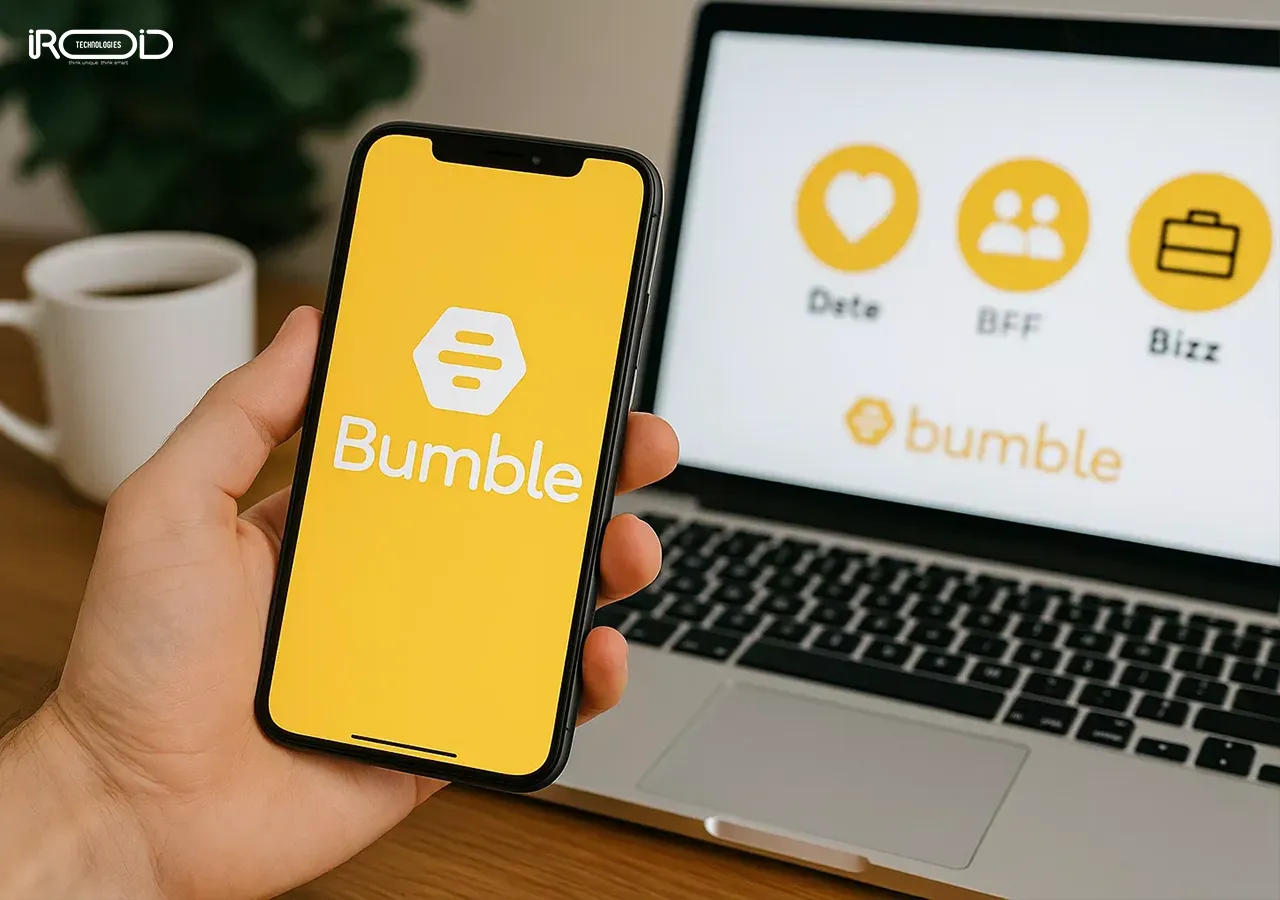
Finding love is as simple as finding a fallen leaf these days. As years pass, the concept of finding love has undergone significant changes. From the awkward silences at first meetings to spending minutes trying to find the right topic to start, matchmaking was a tough thing to do. Fast forward to the current day: dating apps like Tinder and Bumble are the saviors for finding great matches, providing countless choices and prompts to start with, and protected with the best safety measures, making you feel confident and bound by privacy laws, offering a rare experience.
It takes days of diligence and dedication to pull up a Dating app like Tinder, requiring strong knowledge of the platform, adept expertise with the tools and technology, and a well-set plan to estimate the app release for public use. Thus, if you are striving to build app like Bumble yet are looking for the perfect guidance to walk you through everything you should know, this blog is all you need!
The Story Behind Bumble
Every individual has a concept of their date. So did Whitney Wolf Herde. She faced several challenges with finding a date on renowned dating apps, sometimes it was verbal assault, and other times it was fraudulence and fake profiles. Taking this as an inspiration, she decided to create her own app, an app that would monitor and manage user safety and provide the users with the best dating experience. She named it Bumble and launched it in December 2014. Soon, there came many other versions of this app, like Bumble Bizz and Bumble BFF, that helped users flourish their business ideas and build a close-knit friend circle.
What Makes Bumble Stand Out?
If Bumble stands out as a top preference amongst dating app users, it is for several reasons, such as:
Easy Log in
There are absolutely no complications in logging into your Bumble profile. All you need to do is share your phone number or e-mail address. Soon, you’ll be receiving an OTP, which, if entered, helps you access the profile and make modifications.
Simple Profile Setting
Adding profile details and setting your profile is easy if you access your profile through your phone number or e-mail address. The basic details would be shared from your email, requiring you to share a few other mandatory details like a bio, your personal preferences, hobbies, and images, only after verifying this. The app has been designed with prompts that help you connect with the right partners and understand them better and personally, through the prompts.
Location Assistance
Dating apps always ask for your location to be turned on. This is because most users prefer real-time dating and taking things forward in no time. The location assistance helps you find people near you, share conversations, and meet in real time.
Swipe Selections
If you are planning for an app like Bumble, then you must have a clear idea of how Bumble algorithm works. Swipe selections have a significant role to play in match selection, which is something unique witnessed among dating app algorithms. It comes with the simplest user interface, allowing you to make matches through simple swipes. A left swipe indicates rejection, and a right swipe indicates approval. There is also a feature called Super Swipe that is marked by giving the profiles a yellow star, meaning you have an extreme interest in their profile. Similarly, a swipe left would show your disinterest or mean that you’ve rejected the profile.
Matchmaking Filters
Bumble apps think differently about matchmaking. It enables two individuals to start a conversation only if a swipe right happens from both sides. Moreover, you can set preferences for your matches based on your age, location, and other personal preferences.
Push Notifications
Pop-up notifications always sound frustrating, especially for dating apps, when you have to swipe too many times to mark all the conversations as read. This is something that Bumble’s working on to save you from and help you with in-app notifications on new messages, users, and profile interests.
Back Tracks
After the ‘swipe fever’ on all the apps, especially dating apps, we often tend to keep swiping even if we find something interesting or boring. But then comes the ‘just missed’ moment in dating apps when you just get over the swipe frenzy, and it suddenly clicks to you that you’ve missed a potential match. This is where Bumble thinks differently from the other apps, introducing backtracks. This feature helps you revisit the profiles you’ve missed and still get a chance to make decisions on them.
Super Swipe
Dating works differently for everyone. With some, you find them having few similarities; with others, you seem to have more differences, which you can swipe left on. Then comes the third option, which is something rarely found and is a noticeable part of how Bumble algorithm works, which helps you super swipe them, which means you’ve found the profile very interesting and don’t want to miss them. This is indicated by a red heart icon that you get on clicking on a profile, helping you connect with the match in no time.
Bumble BFF and Bizz Community
Ever bumped into those people who look for ‘friends’ on a dating app? Yes, you read that right. There are a handful of people who look forward to simply finding good friends. Bumble has come up with a solution to this by introducing them to the Bumble BFF community. This community helps you connect with like-minded individuals who are simply looking for good friends. Similarly, if you have a business idea and are planning to establish it sooner, then try switching to Bumble Bizz. This way, Bumble has intelligently covered all types of users and has set the dating app algorithm right to meet their needs.
Safety Verifications
As owned by a woman, safety and security are Bumble’s top priorities. It confirms that the users stay real by verifying their profile pictures within a day and reporting any minute fraud. In addition, Bumble comes with a second-level verification where users are required to take real-time selfies matching virtual images shared in real-time to prove their identity to the app owners.
Bumble Business Models
How do you think Bumble has been staying successful in increasing the number of users daily? The monetization strategies are the answer. Here are some of their strategies that drive their monetization:
Subsriptions
Upgrading to Bumble Premium makes you a prioritized user and gives you a lot of priorities and benefits that others may miss. There are two such premiums; Bumble Boost and Bumble Premium. Bumble Boost is for those who are looking to regain a chance to work out their missed chances, explore the skipped profiles, and extend the time limit to find matches in a day. Usually, Bumble doesn’t allow you to find more than a certain number of matches per day. Bumble Premium shows and creates an opportunity for you to connect with those who’ve swiped on you, leaving you with many more choices to connect with.
In-App Purchases
Superswipes are extra perks that you get on Bumble after using the app for a while or finding a couple of great matches. However, you get a few after a specific timeframe and must wait for quite a long time to get your next super swipe. Here, Bumble offers you a paid service to find more potential matches through swipes called Superswipes. These are available as a pack of one, five, or ten, increasing your chances of connecting with the best profiles within a shorter time period.
Ads
Let’s be honest—we’ve all lost our minds watching countless ads amidst the dating experience, turning frustrated for it to end, hoping that it ends soon. But on the flip side, it is important to understand that the platform charges these brands a nominal amount to establish their presence on the platform and showcase their logo, brand name, and their products. It is a surprising and lesser-known fact that Bumble charges for the ad spaces, yet it is the biggest earning source of dating apps.
Building a dating app is not just about coding features. It requires a strong digital transformation strategy that aligns user experience, data security, monetization, and platform scalability.
Steps in Developing an App Like Bumble
Thriving amongst the most successful apps is a task at hand, especially if you’re expecting to launch an on-demand app. Here’s how to build a matchmaking app like Bumble:
Step 1: Understand User Expectations
Start by studying the dating app market, the changing requirements, and the challenges. Also, invest sufficient time in studying or visiting the dating app market and focus on the issues that it has been consistently facing and then plan your app accordingly.
Step 2: Highlight the USPs
Identify the niche of your dating app as to whom you are targeting as the prime users. Today, there are umpteen categories of dating apps for singles, divorced, widowed, and even the LGBTQ+ communities. So, focus on your target groups and understand their likes, preferences, and interests. To get a better understanding, you may conduct interviews, prepare questionnaires, or even go for a simple social media poll.
Step 3: Pick Features Carefully
No matter how perfect you aim for a dating app to be as a final output, you may always regret post-launch the missing features that another leading app has got. It should be focused on the dating goals of users (casual or serious), matching criteria (prompts, games, and other personal choices), and meeting the dating goals (short term and long term) in an impressive manner. Similarly, it should assist users with links towards social media profiles, that being said, with an assurance towards safety and user verifications. Remember, users look for goals and match the trends. Technicalities are less looked for as user satisfaction is what matters the most.
Step 4: Work on the UI
Your app is getting nowhere if you miss on the user interaction elements. Focus on what can bring in more users to your app- whether it is the games, prompts or even other features that can bring in more matches. Another pro-tip is that you invest on an emotional design that gets easily connected with your users, making them stick on for the longest time. Avoid anything that’s too flashy for the app.
Step 5: Select the Tech Stack
The app should be simple, effective, and relatively easy to use, just like the Bumble tech architecture explained. To make this happen, stick to the right tech stack that gels well with the apps. For real-time chatting and interactions, you can preferably go for front-end technologies like Flutter and React Native; the backend can be enhanced through Node. JS and Django, PostgreSQL and MongoDB can handle databases effectively, and Firebase, AWS, or Google Cloud can enhance the platform handling with ease. But before you dive deep into these, you must have an idea as to how to choose the right tech stack for your apps.
Step 6: Plan the Algorithms
App developers in India should be well-versed in algorithms. The algorithms should be based on the needs and nature of dating apps. Secondly, plan for unique and valid USPs that would make your app stand out as a choice. Then, collect all the necessary data you would like to add to the app and that people would be most willing to share, such as their location, name, photos, age, and even social media profiles. Then choose the right MVP and include all mandatory details, such as the distance preferred, type of dating preferred, and desirability management to check the user satisfaction.
Step 7: Plan for the User Profile Creation
The profile creation process must help users set a simple and genuine profile that reflects their nature. This can be possible by providing a space for mandatory details or setting prompts on unique thoughts like hobbies, passions, nature, taste in music, and so on. This is something new yet attractive, where the users get to understand and connect on out-of-the-box thoughts and concepts, breaking dating stereotypes. Essentially, it should help them with the option to edit their profile as and when needed to help them find better matches.
Step 8: Work on the MVP
Before engaging the users, the dating apps should give them a warm welcome and set a comfortable space. This, needless to say, means that the features, user profile, prompts, and editing options should be kept simple and accessible. Second, the usage patterns should be the simplest and accessible to users of all age categories (within the usage limit), such as swipes, taps, and chats. In addition, to while away time between finding matches or chats, gamification experiences would be a parameter to connect with great profiles.
Step 9: Launch and Monetize the App
Before you launch, make sure that you launch it at the right time when the audience needs it. For a better experience, launch a trial version for a few days, measure the impact, followed by launching the original version. Then, keep an eye on the trends and major updates, changing algorithms, and latest technologies being introduced i,n dating apps and how they create an impact on the sales and reach. Also, as mentioned earlier, providing space for related ads, videos, and other marketing collateral by collaborating with successful brands can help with app monetization.
Cost Breakdown of Dating Apps in Phases
The dating apps, on average, inclusive of the research and development, are expected to cost as follows:
♦ iOS apps could cost over INR 1,200,000 to INR 1,700,000.
♦ Android apps could range between INR 12,00,000 and INR 17,00,000.
♦ The app's presence on both platforms could cost between INR 2,100,000 and 3,400,000.
Though this is the estimate of how much a dating app would cost in comparison to the Bumble app cost, it may vary based on different other factors like the developer’s expertise, the tech stack used, and the duration of development.
Conclusion
A dating app is much more than a few swipes and taps. It opens doors to new communications and new bonds and transitions you to another phase of your life. It is something that requires a lot of filters, analysis, and cross-verifications. Therefore, if you have an idea or thought about developing such an app, then it is wise to seek help from a professional mobile app development company. Bumble and Tinder are the main choices when it comes to dating apps, the reason being the privacy, verification, and rapport they try to set between their users. While technology is making dating apps succeed by the ‘survival of the fittest’ policy, make sure that you invest sufficient time in research, dating app development, and updates to get ahead in the race.

Meera Bhadran is a technical content writer at Iroid Technologies with commendable years of experience in several domains like e-commerce, fintech and advanced technologies. With a strong knowledge of SEO strategies and technology insights, she also converts the tech updates into different informative formats. Her works are research-oriented, well-articulated and communicative to the audience.